
🫏🫏🫏
Zizou
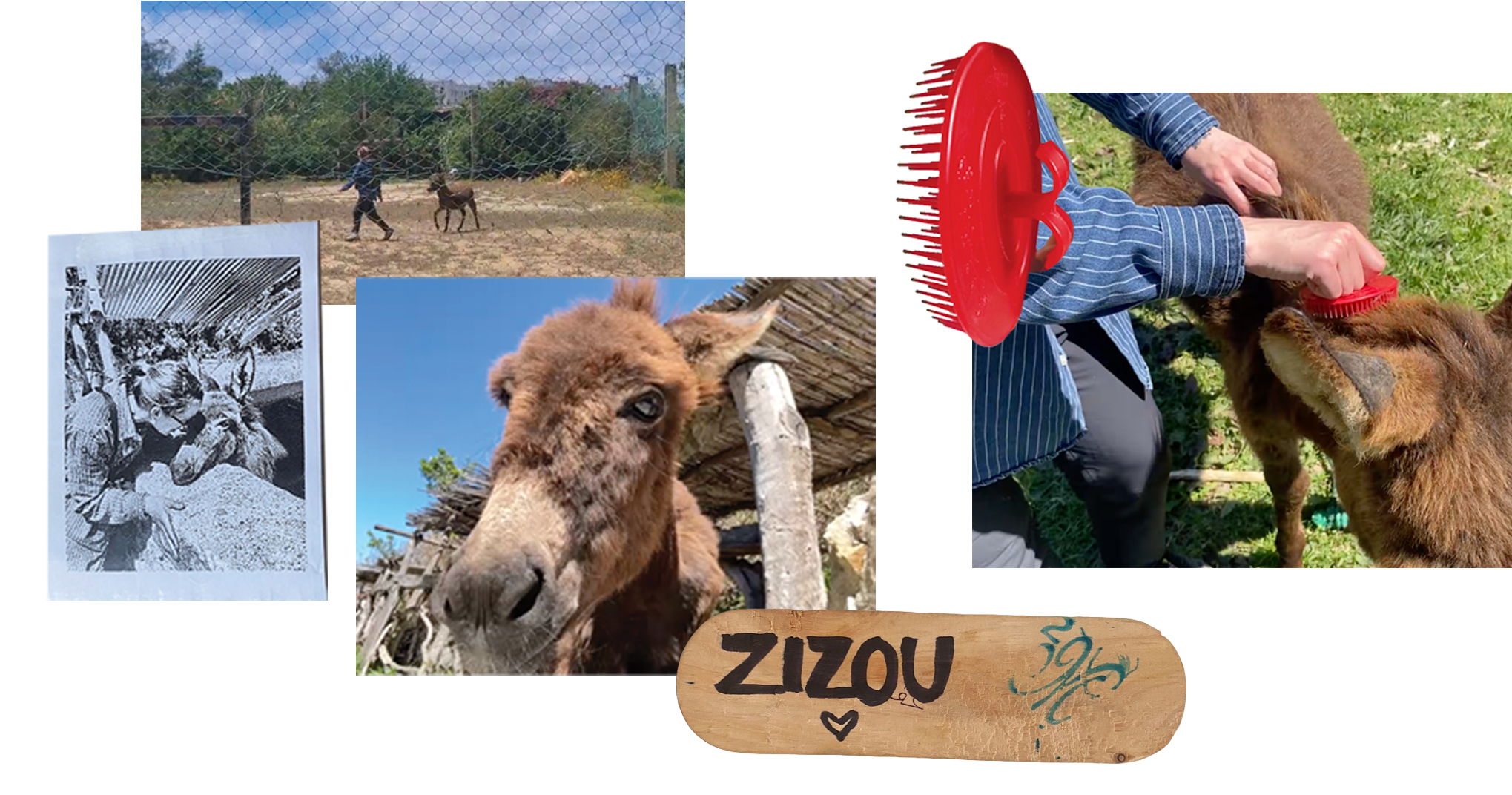
Teachings from a Donkey
Care is another key component of practicing wild intelligence. My time working at Darna’s Pedagogical Farm brought me closer to a donkey named Zizou, a relationship that inevitably raised profound questions of ethics while practicing inter-species care. Below are a few reflections on our interactions and the development of the relationship.
After learning more from Abdou Nakata Benattabou (Founder of the Donkey Museum in Tangier) about the broader perception of donkeys in Morocco combined with my initial chemistry with Zizou, I felt inspired to commit to giving her weekly “spa treatments”, hoping it could fortify the bond between us and the staff at the farm.
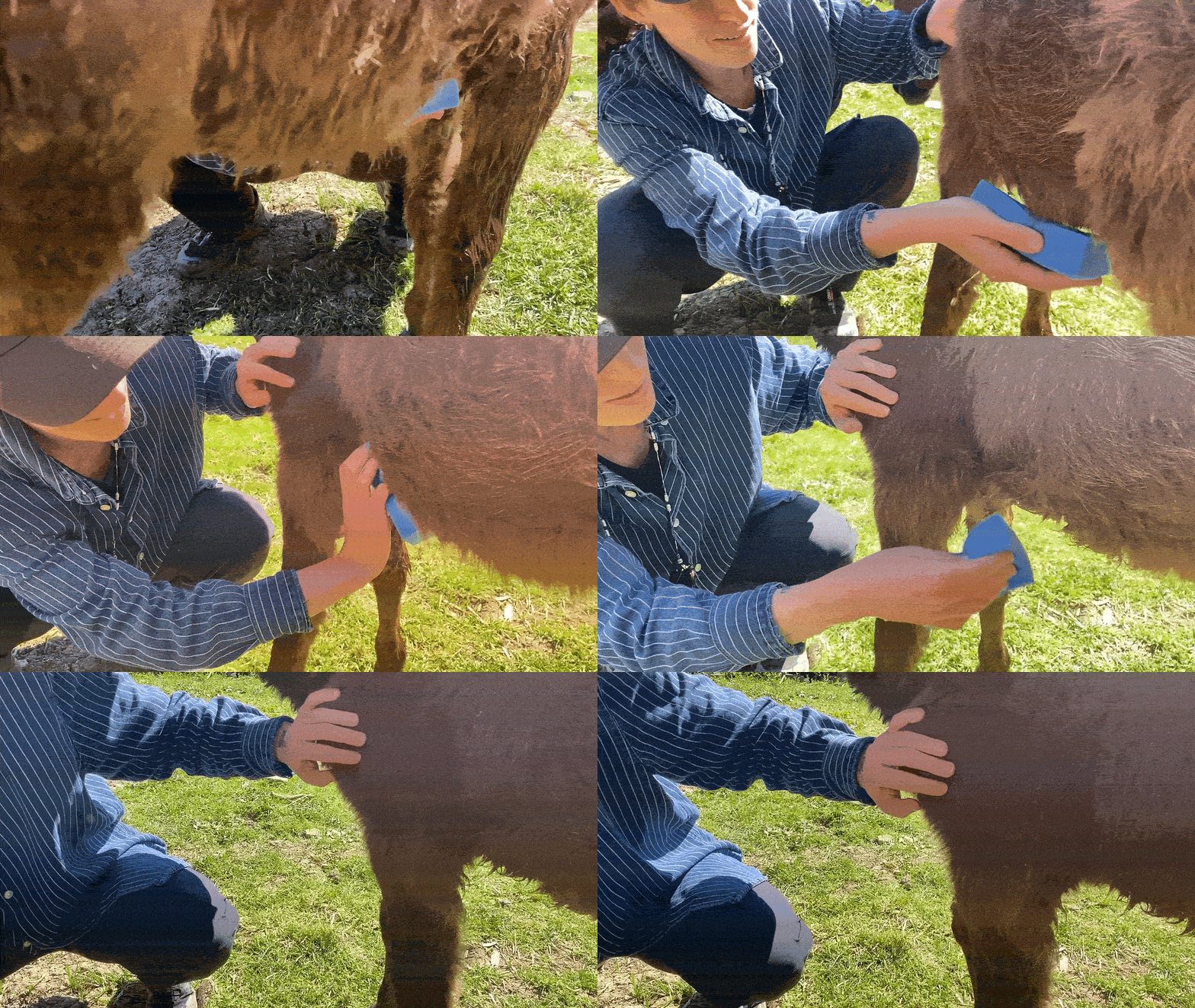
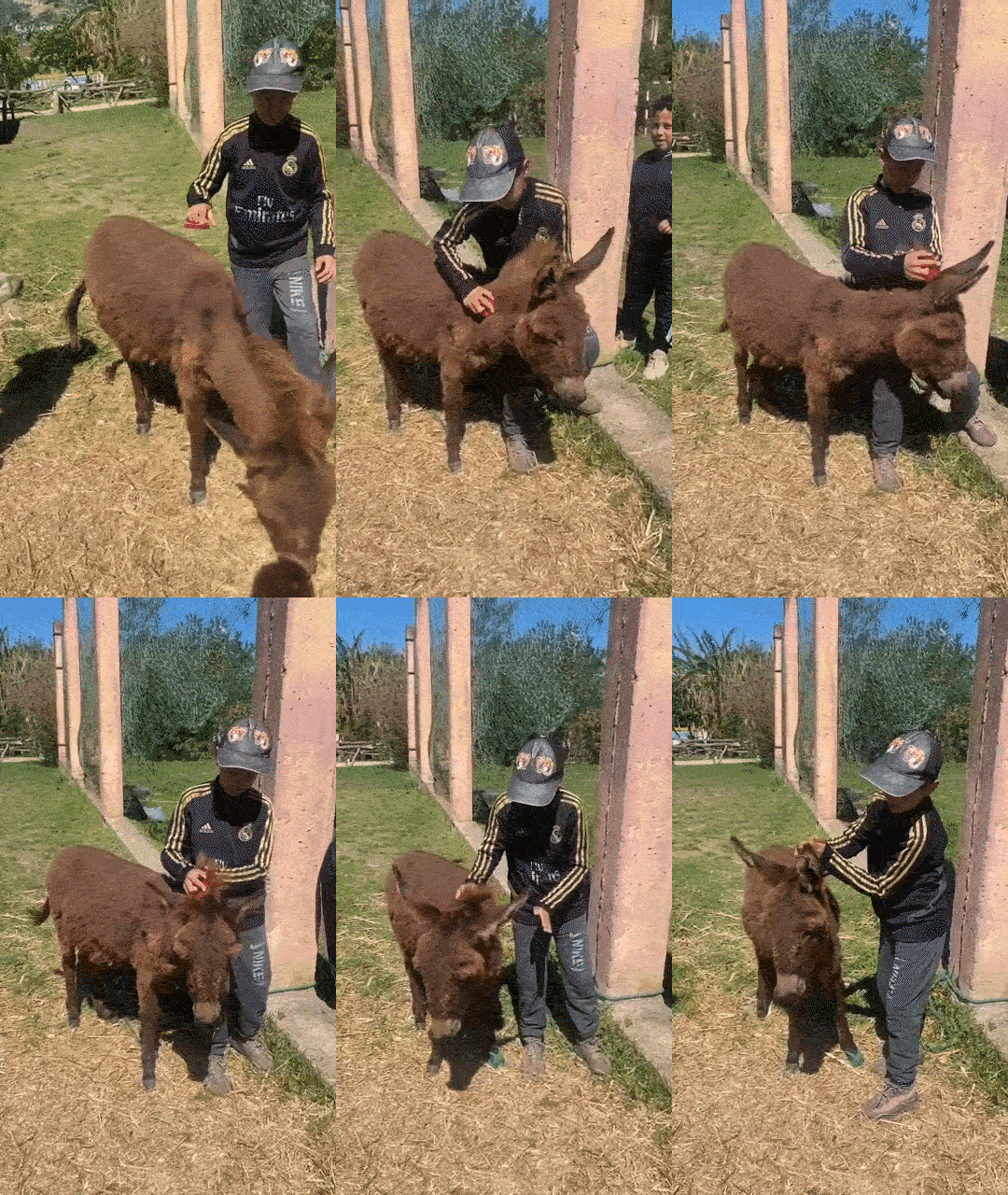
Hammam Hairbrush
As I prepared for the first “spa day” with Zizou, I was unable to locate a specialized donkey brush. Instead, I improvised by using a hairbrush I had purchased for myself to use in the hammam. Upon reflection, this gesture reveals a profound intimacy: gifting a tool of personal care, to tend to a donkey. This act blurred the boundaries between her and I (human and donkey), transforming a simple brush into a tool for facilitating care.
My classmate Marit Snepvangers graciously captured the first time I brushed Zizou. Reviewing the footage revealed behavioral nuances of which I had been entirely unconscious, such as singing little songs and whispering positive affirmations to her. These momentes embodied what I consider ethical care—these mutually beneficial experiences exemplify what reciprocity can feel like.
Consequences
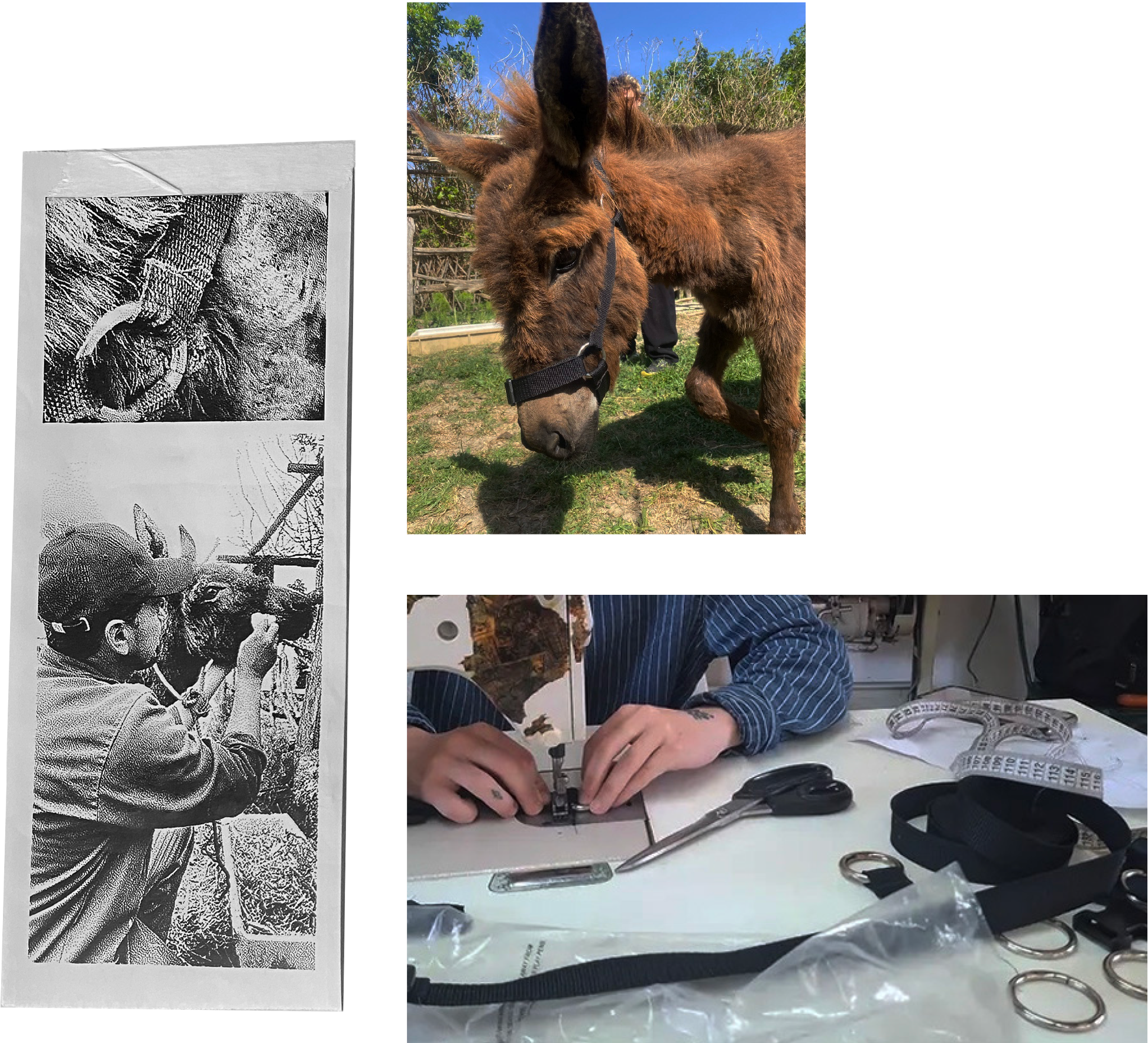
There were instances with Zizou where I was confronted again with questions around my positionality. My classmate Maja Bolier and I were growing concerned about how Zizou was tied up by her ankle, we assumed it was harmful for her and decided to construct a halter, something more comfortable. At the time, the process of sewing the halter brought me great pride, my ego was pleased with doing something that could improve her quality of life. When she wore the halter initially, she seemed very happy, having more freedom to move around.
However the following week when I came to visit, I noticed a wound on her cheek that developed from the metal ring of the halter chaffing on her skin. In this moment I felt so guilty, my intentions of caring for her resulted in harm. I learned that there can be real consequences from actions that are driven by emotions. I consider my emotional capacity a strength at times, but this situation exemplified the possibility of it also being damaging. I was jumping to solutions for her in response to my own feelings, reverting into white savior-ism behaviour. Embedded in my actions were assumptions that she wasn’t being cared for properly.
It was the prioritization of my own feelings and making of assumptions that was problematic, neglecting to step back and ask questions or lead with curiosity to navigate the situation. If I could do it again, I would take more time to shadow the Darna staff to experience first hand how they care for her and the donkeys they’ve had in the past. I would ask about challenges and limitations they’ve experienced when it comes to caring for her. Without taking the time to understand the context more deeply, I see now the risks of falling into white savior tendencies. I am grateful for this experience as it models a process of decolonizing research (and myself) specifically within the subject of inter-species care. As my practice develops, I will carry these lessons of slowing down, approaching the context with curiosity, and maintaining an awareness of how emotions can drive impulsive action.
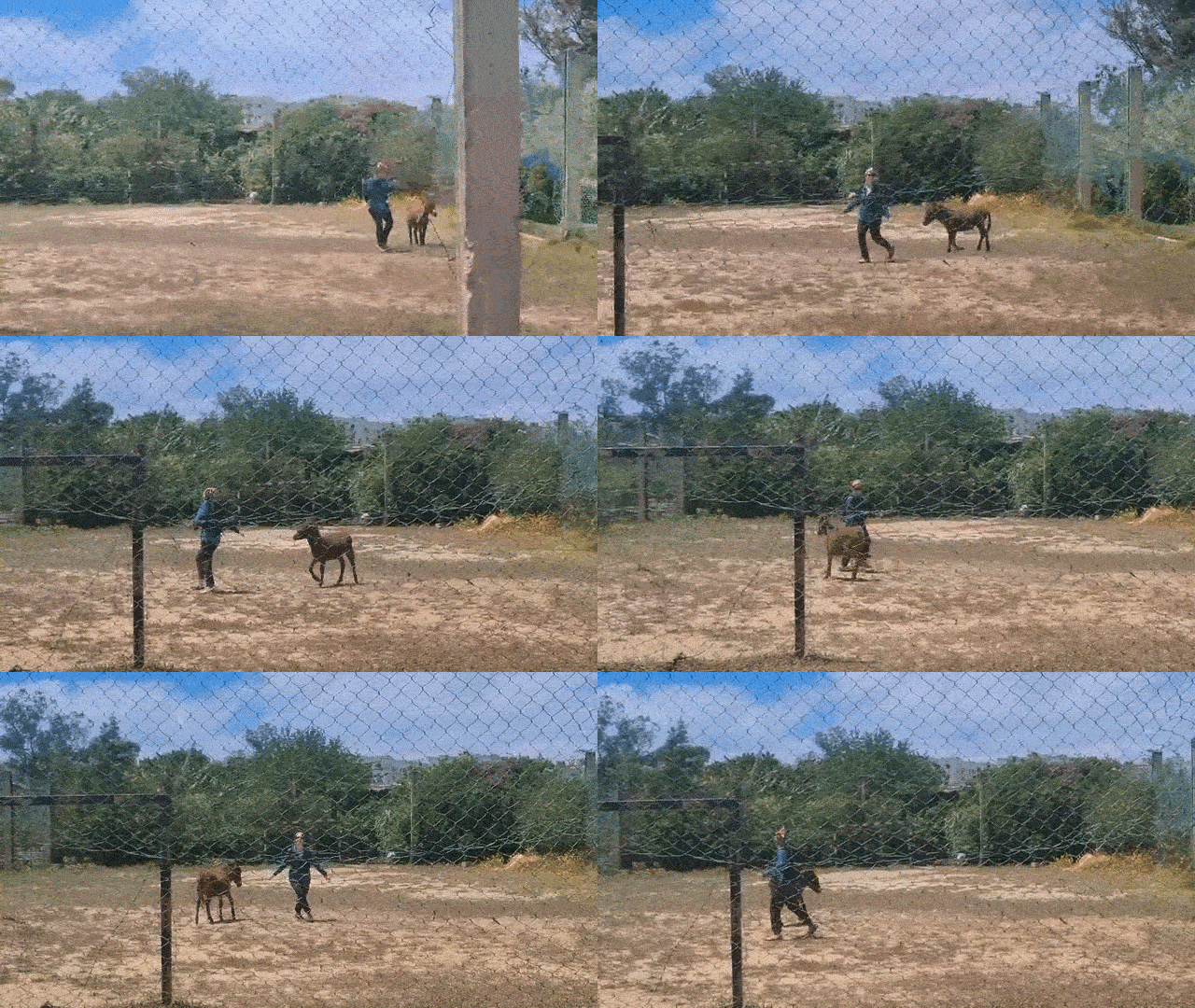
Dancing Donkey
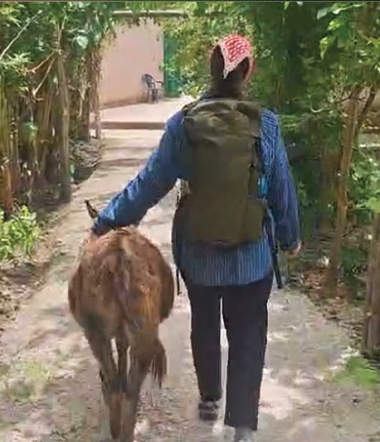
Towards the end of my time in Tangier, I went to the farm to visit Zizou. She wasn’t in her usual pen, but instead I found her walking freely in a small field. It was the first time I had witnessed her without a rope restricting her. It brought me so much joy to see her in this way, knowing that someone trusted her enough to let her loose. I started dancing around the field in celebration and Zizou’s response was to join the frolicking, an image forever burned into my memory. For the next hour she was my shadow, following me around the farm. Of course this was visible to the Darna staff, some found it comical, others recognized that there was a meaningful bond between us.
I believe this moment really captures the beauty of inter-species relationships and how when navigated ethically there is potential to shift how people relate and position themselves with the beings around them.